
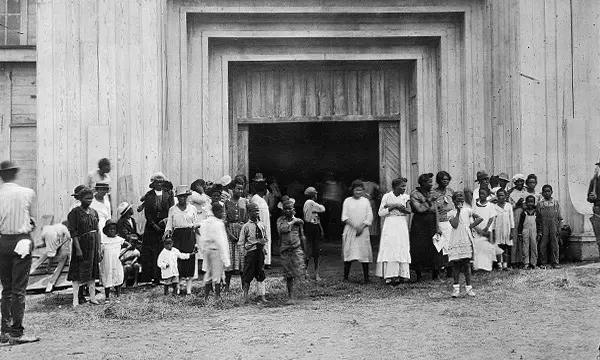
After the Tulsa Race Massacre, survivors rebuilt homes and businesses without receiving compensation for much of what they had lost. The financial consequences extended far beyond the neighborhood's reconstruction.
For the families who lived in Greenwood before the summer of 1921, property represented something more than a place to live or earn a living. A home could provide security in a segregated city where Black residents faced limited housing opportunities. A storefront could support a family for decades, and perhaps provide the foundation for a business that children and grandchildren might one day inherit.
Those possibilities were violently interrupted on May 31 and June 1, when a white mob descended on Greenwood, destroying homes, businesses and community institutions across more than 35 square blocks.
In the weeks that followed, survivors confronted a problem that would shape the neighborhood's recovery. Many had lost the very assets they would ordinarily have relied upon to finance rebuilding. Their businesses were gone, their incomes had disappeared, and insurance companies were refusing to compensate many property owners for their losses.
The question was no longer simply whether Greenwood could be rebuilt. It was whether the families who had built it could afford to begin again.
The answer depended, in part, on decisions made far beyond the devastated neighborhood.
Insurance companies invoked riot exclusions. Tulsa officials adopted costly construction requirements that threatened to prevent residents from rebuilding on their land. Local real estate interests proposed transforming the area into an industrial district, raising the prospect that property owners could lose not only their buildings but their place in the community.
Black attorneys successfully challenged the city's restrictions, and residents began reconstructing their homes and businesses. But the legal victory did not restore the savings, inventory and property destroyed during the Massacre. Families were left to absorb losses that would have been difficult to recover under any circumstances, much less in the segregated economy of early twentieth-century Tulsa.
For some, rebuilding meant replacing property they had spent years acquiring. For others, it meant starting businesses again with fewer resources than they had possessed before the attack. Still others left Tulsa, taking their families and whatever remained of their livelihoods elsewhere.
Their experiences did not necessarily end when they found new homes or reopened their businesses. The financial decisions forced upon survivors could affect what they owned years later and what, if anything, they were able to leave to their children.
Tracing those consequences requires looking beyond the records of destroyed buildings and denied insurance claims. It means following the families who owned them, examining how their circumstances changed and understanding what they remembered about the lives they had been forced to rebuild.