
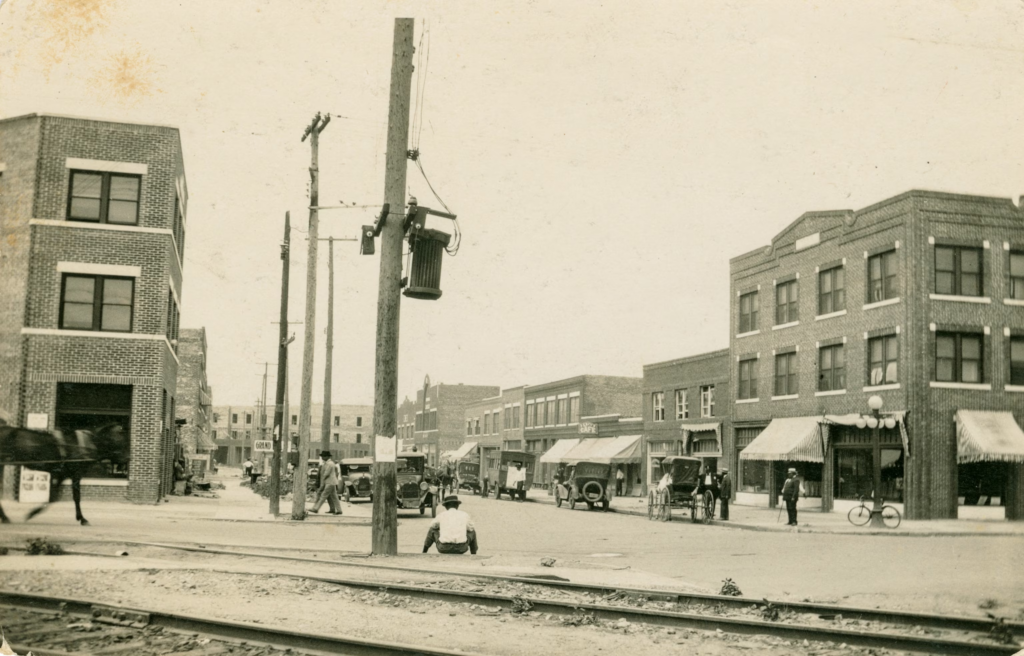
When we think about Black philanthropy, we may not immediately think about the entrepreneurs, families and community institutions that helped build Tulsa's Greenwood District, later known as Black Wall Street. But long before philanthropy had today's foundations and formal giving structures, Black communities were developing their own traditions of giving, mutual support and community investment.
O.W. Gurley's story offers one way into that history.
In 1905, Gurley and his wife, Emma, moved to Tulsa, where he purchased 40 acres of land north of the Frisco railroad tracks. He built a rooming house on what would become Greenwood Avenue and went on to develop a hotel and other properties that he rented to Black businesses.
Gurley was an entrepreneur and real estate investor, but viewing his story only through the lens of business leaves out something important about the community he was helping to create. His investments provided space for other Black people to live, operate businesses and participate in an emerging local economy.
His approach was also part of a much older tradition of Black community investment.
Black Philanthropy and Community Investment in Oklahoma
For generations, Black Americans have used the resources available to them to meet needs that public and private institutions often refused to meet.
Money was part of that tradition, but it was never the whole of it. Black communities shared property, established schools and churches, created mutual aid networks, supported Black-owned businesses and used their knowledge and relationships to create opportunities for others.
In Oklahoma, this tradition was closely connected to land and self-determination. Black settlements and towns developed across the state as Black people created places where they could live, work and build with greater autonomy.
Gurley's investments were part of that environment.
As Greenwood grew, families established homes. Entrepreneurs opened stores, hotels, restaurants and entertainment venues. Doctors and lawyers established practices. Residents supported churches, schools, newspapers and civic institutions.
By 1920, Greenwood's population had reached roughly 11,000. While its successful entrepreneurs are often the most celebrated figures today, laborers and hospitality workers made up much of the neighborhood's foundation. People across economic classes participated in sustaining its businesses and institutions.
Understanding that broader community changes how we understand the prosperity that made Greenwood famous.
How Community Investment Helped Build Black Wall Street
The name "Black Wall Street" understandably draws our attention to wealth. But the significance of the Greenwood District was not simply that individual Black business owners became successful.
Its strength came from the relationships between people, businesses and institutions.
John and Loula Williams invested their earnings into businesses that included the Dreamland Theatre and the Williams Building. Other residents established grocery stores, transportation companies and professional practices. Greenwood eventually supported schools, a hospital, a library, hotels, theaters, newspapers, churches and other institutions that served the community.
Segregation played an undeniable role in concentrating Black economic activity within Greenwood. Black Tulsans were building within a system that restricted where they could live, shop and participate in public life. Within those constraints, they created networks through which money, knowledge, opportunity and support could circulate.
Seen through the lens of Black philanthropy, Greenwood becomes a story larger than individual entrepreneurial achievement. People were contributing to an environment that allowed others to build alongside them.
O.W. Gurley mattered. So did the Williams family and other prominent Black entrepreneurs whose names remain part of Greenwood's history. But so did the teachers, laborers, domestic workers, church members, customers and families whose daily participation sustained the community.
Their contributions may not fit neatly into the way philanthropy is often discussed today. Collectively, however, they helped create something more consequential than individual success: a community with the capacity to invest in itself.
Greenwood Offers a Broader Definition of Legacy
Greenwood gives us an opportunity to expand the way we think about both philanthropy and investment.
Capital matters. So do the opportunities we create, the knowledge we share, the relationships we open, the institutions we strengthen and the people we position to build after us.
That perspective also asks us to look differently at O.W. Gurley's legacy. His significance is not simply the property he accumulated or the businesses he developed. Part of his legacy can be found in what those investments helped make possible around him and in the many Black Tulsans who then contributed their own resources, labor and expertise to Greenwood's growth.
This is part of the history behind Black Wall Street that measures of individual wealth alone cannot capture.
The history of Black philanthropy reminds us that some of our most consequential investments may never carry our names. Their value can be found in the opportunities they create for someone else, the institutions they help sustain and the communities that become stronger because people chose to invest in their future.